

How do I know if a round concrete umbrella base is strong enough for my umbrella?
Jun 20, 2025
Determining whether a round concrete umbrella base is strong enough for your umbrella is a crucial consideration to ensure the safety and stability of your outdoor setup. As a supplier of high - quality round concrete umbrella bases, I've encountered numerous customers with questions regarding the strength and suitability of our products. In this blog post, I'll share some key factors to help you make an informed decision.
Understanding the Basics of Umbrella Base Strength
The strength of a round concrete umbrella base is primarily determined by two main factors: its weight and the quality of the concrete used in its construction.
Weight
The weight of the base is perhaps the most straightforward indicator of its strength. A heavier base will generally provide more stability, especially for larger umbrellas or in areas prone to strong winds. As a general rule of thumb, for a standard patio umbrella with a diameter of 6 - 8 feet, a base weighing between 50 - 75 pounds should suffice. However, if you have a larger umbrella, say 9 - 11 feet in diameter, you'll need a base that weighs at least 100 pounds or more.
Our Round Concrete Umbrella Base comes in a variety of weights to meet different needs. We offer bases ranging from 50 pounds for smaller, more lightweight umbrellas to 200 pounds for extra - large and heavy - duty umbrellas. When selecting a base based on weight, it's important to consider the size and type of your umbrella, as well as the local weather conditions.
Quality of Concrete
The quality of the concrete used in the base also plays a significant role in its strength. High - quality concrete is dense, durable, and resistant to cracking and chipping. At our company, we use a special blend of cement, aggregates, and additives to ensure that our round concrete umbrella bases are of the highest quality.
The aggregates in our concrete are carefully selected for their size, shape, and strength. Larger aggregates can provide more structural integrity, while smaller ones help to fill in the gaps and create a smoother finish. The additives we use enhance the concrete's workability, durability, and resistance to environmental factors such as freeze - thaw cycles and moisture.
Factors Affecting the Need for Base Strength
In addition to the size of the umbrella, several other factors can influence how strong your round concrete umbrella base needs to be.
Wind Conditions
Wind is one of the most significant factors affecting the stability of an umbrella. Even a relatively small amount of wind can cause an umbrella to tip over if the base is not heavy enough. If you live in an area with high winds, such as a coastal region or an open plain, you'll need a stronger base to keep your umbrella in place.
For example, if you frequently experience gusts of wind over 20 miles per hour, you should consider using a heavier base. Our 150 - pound or 200 - pound round concrete umbrella bases are ideal for such conditions. You can also take additional precautions, such as closing the umbrella during strong winds or using guy wires to further secure it.
Umbrella Shape and Design
The shape and design of your umbrella can also impact the base's required strength. Some umbrellas have a wider canopy or a higher center of gravity, which makes them more prone to tipping. For instance, a cantilever umbrella, which has a curved pole and a large overhanging canopy, requires a stronger base than a traditional center - pole umbrella.

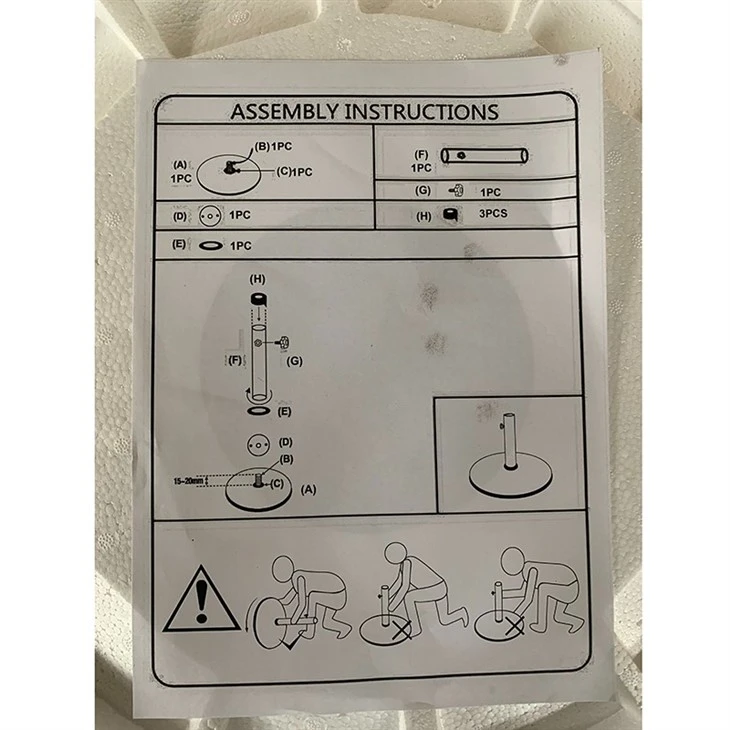
Our round concrete umbrella bases are designed to accommodate different umbrella shapes and designs. The center hole in the base is sized to fit a variety of pole diameters, and the round shape provides a stable foundation for the umbrella. Whether you have a standard patio umbrella or a more unique design, we can help you find the right base.
Surface Type
The surface on which you place the umbrella also matters. If you're using the umbrella on a soft or uneven surface, such as grass or sand, the base may sink or shift, reducing its stability. In such cases, you may need a heavier base or a base with a larger footprint to distribute the weight more evenly.
On the other hand, if you're placing the umbrella on a hard, flat surface like a patio or deck, a lighter base may be sufficient. However, it's still important to ensure that the surface is clean and free of debris to prevent the base from slipping.
Testing the Strength of a Round Concrete Umbrella Base
Before purchasing a round concrete umbrella base, it's a good idea to test its strength. While you can't conduct a full - scale wind test at home, you can perform some simple checks to assess the base's quality and stability.
Visual Inspection
Start by examining the base for any visible cracks, chips, or signs of damage. A high - quality round concrete umbrella base should have a smooth, even surface with no obvious defects. Check the center hole to make sure it's clean and free of debris, and that it's the right size for your umbrella pole.
Weight and Balance
Lift the base to get a sense of its weight. It should feel substantial and well - balanced. If the base feels too light or unsteady in your hands, it may not be strong enough for your umbrella. You can also try gently rocking the base to see how stable it is. A good base should remain firmly in place without excessive movement.
Comparing Round and Square Concrete Umbrella Bases
While round concrete umbrella bases are popular for their aesthetic appeal and stability, square concrete umbrella bases also have their advantages. Square Concrete Umbrella Base offer a larger footprint, which can provide more stability, especially on uneven surfaces. They also tend to be easier to stack and store.
However, round bases are often more versatile and can blend in better with different types of umbrellas and outdoor decor. The round shape provides a 360 - degree view of the umbrella, and it's less likely to catch on furniture or other objects. Ultimately, the choice between a round and a square base depends on your personal preferences and the specific requirements of your outdoor space.
Conclusion
Choosing a round concrete umbrella base that is strong enough for your umbrella is essential for a safe and enjoyable outdoor experience. By considering factors such as weight, quality of concrete, wind conditions, umbrella shape, and surface type, you can make an informed decision.
At our company, we're committed to providing high - quality round concrete umbrella bases that meet the diverse needs of our customers. Whether you're looking for a small base for a lightweight umbrella or a heavy - duty base for a large, wind - prone setup, we have the right product for you.
If you're interested in purchasing our round concrete umbrella bases or have any questions about their strength and suitability for your umbrella, please don't hesitate to contact us. We're here to help you select the perfect base and ensure that your outdoor space is both beautiful and functional.
References
- "Outdoor Umbrella Buying Guide," Consumer Reports, accessed [date].
- "Wind Load Calculations for Umbrellas," Engineering Toolbox, accessed [date].
- "Concrete Mix Design and Quality Control," National Ready Mixed Concrete Association, accessed [date].