

Can a round concrete umbrella base be used on an uneven surface?
Jan 06, 2026
When setting up a patio umbrella in an outdoor space, the choice of the umbrella base is of utmost importance. One common question that arises is whether a round concrete umbrella base can be used on an uneven surface. As a trusted supplier of round concrete umbrella bases, I'm here to provide you with a comprehensive analysis of this issue.
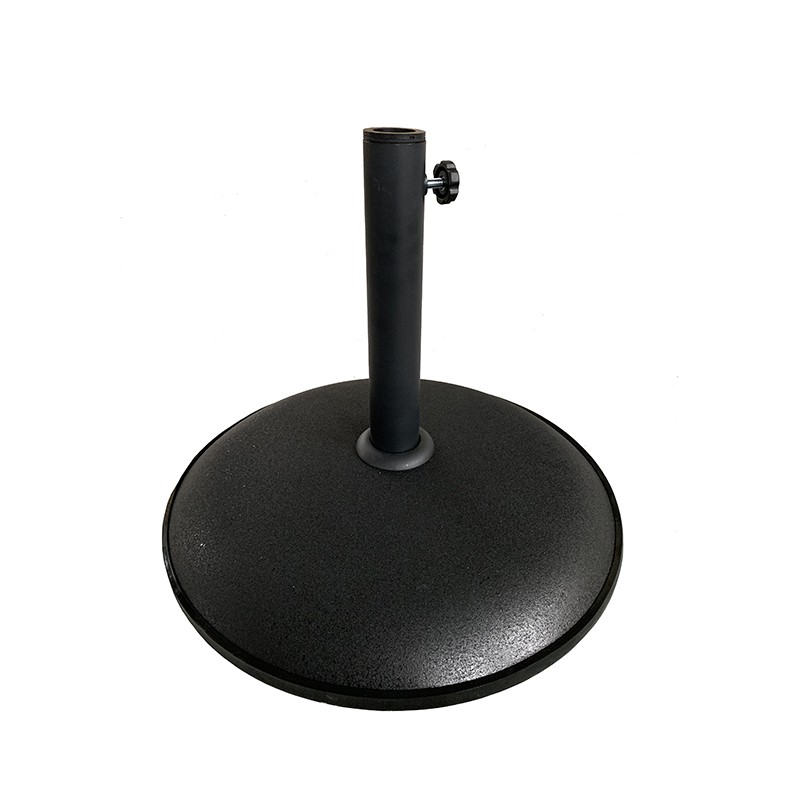

Understanding the Structure of Round Concrete Umbrella Bases
First, let's understand the characteristics of round concrete umbrella bases. Our Round Concrete Umbrella Base is designed with high - quality concrete, which offers stability and durability. The round shape evenly distributes the weight of the umbrella across its circumference, providing a balanced support system. This design is particularly beneficial as it helps to counteract the wind forces that can blow against the umbrella.
The center of a round concrete umbrella base is typically hollow to accommodate the umbrella pole. This alignment ensures that the umbrella stands upright when properly installed. The weight of the concrete base also acts as an anchor, preventing the umbrella from tipping over easily.
Challenges of Using Round Concrete Umbrella Bases on Uneven Surfaces
Using a round concrete umbrella base on an uneven surface does present some challenges. The main issue is the lack of a flat and stable contact area. An uneven surface can cause the base to rock or tilt, which in turn affects the stability of the umbrella mounted on it.
For instance, if the surface has a significant slope, the round base may roll or slide down the slope, especially when there are external forces such as wind or accidental bumps. Even a small unevenness can lead to an imbalance in the base's weight distribution, making the umbrella more likely to tip.
Another problem is the potential damage to the base itself. When placed on an uneven surface, the base may experience uneven stress. Over time, this can cause cracks or fractures in the concrete, reducing the base's lifespan and compromising its ability to support the umbrella.
Possible Solutions
Despite the challenges, there are several solutions that can allow you to use a round concrete umbrella base on an uneven surface.
Surface Preparation
One of the most effective ways is to prepare the surface before placing the base. You can use a leveling compound to fill in small depressions or smooth out minor bumps. For larger uneven areas, you may need to use a trowel or a small shovel to remove high spots and level the ground as much as possible.
Using Shims
Shims are thin pieces of material that can be used to create a level surface under the base. You can place shims under the low points of the base to raise them and make the base more stable. Materials such as wood, plastic, or rubber can be used as shims. Make sure to place the shims evenly around the base to distribute the weight properly.
Adding a Base Pad
A base pad can act as an intermediary between the round concrete base and the uneven surface. The pad can be made of a flexible material that can conform to the shape of the uneven ground while providing a flat surface for the base. Some base pads are also designed to be non - slip, which further enhances the stability of the base.
Comparison with Square Concrete Umbrella Bases
It's also worth comparing round concrete umbrella bases with Square Concrete Umbrella Base when considering use on uneven surfaces. Square bases have a larger flat contact area compared to round bases. This means that they may be more stable on slightly uneven surfaces as they are less likely to rock or roll.
However, round bases have their own advantages. Their circular shape allows for a 360 - degree rotation of the umbrella, which is useful for adjusting the shade throughout the day. In addition, round bases often have a more aesthetically pleasing and modern look, which can complement various outdoor decor styles.
Real - world Applications and Case Studies
In real - world scenarios, we have seen many customers successfully use our round concrete umbrella bases on uneven surfaces. For example, a customer with a garden patio that had a slight natural slope was able to make the base stable by using a combination of surface preparation and shims. After leveling the area as much as possible, they placed small wooden shims under the lower side of the base. This simple solution allowed them to enjoy their patio umbrella without any issues of instability.
Another customer with a pebble - covered beach area used a base pad beneath the round concrete base. The pad provided a flat and stable platform for the base, preventing it from sinking into the pebbles and ensuring the umbrella remained upright even in strong coastal winds.
Conclusion
In conclusion, while using a round concrete umbrella base on an uneven surface has its challenges, it is definitely possible with the right strategies. By properly preparing the surface, using shims, or adding a base pad, you can ensure the stability of your umbrella and extend the lifespan of the base.
Our company is dedicated to providing high - quality round concrete umbrella bases that meet the diverse needs of our customers. Whether your outdoor space has a perfectly flat surface or an uneven one, we have the solutions for you. If you are interested in our products or have any questions regarding the use of round concrete umbrella bases, please feel free to contact us for采购洽谈 (note: as per instruction not to use non - English, this is just an indication of original word). We are here to assist you in making the best choice for your outdoor setup.
References
- Concrete Design Handbook: A Practical Guide. This handbook provides in - depth information on the properties and applications of concrete, which is relevant to understanding the performance of concrete umbrella bases.
- Outdoor Furniture Installation Manual: It contains tips and best practices for installing various types of outdoor furniture, including umbrellas and their bases, on different surfaces.