

Are round concrete umbrella bases resistant to chemicals?
Jan 14, 2026
Hey there! I'm a supplier of round concrete umbrella bases, and today I wanna chat about whether these bases are resistant to chemicals. It's a question I get a lot from customers, and it's super important to know, especially if you're using your umbrella in different environments.
First off, let's understand what we mean by chemical resistance. Chemicals can come in all sorts of forms, like cleaning agents, fertilizers, pool chemicals, and even the natural acids in rainwater. When these chemicals come into contact with the concrete umbrella base, they can potentially cause damage over time.

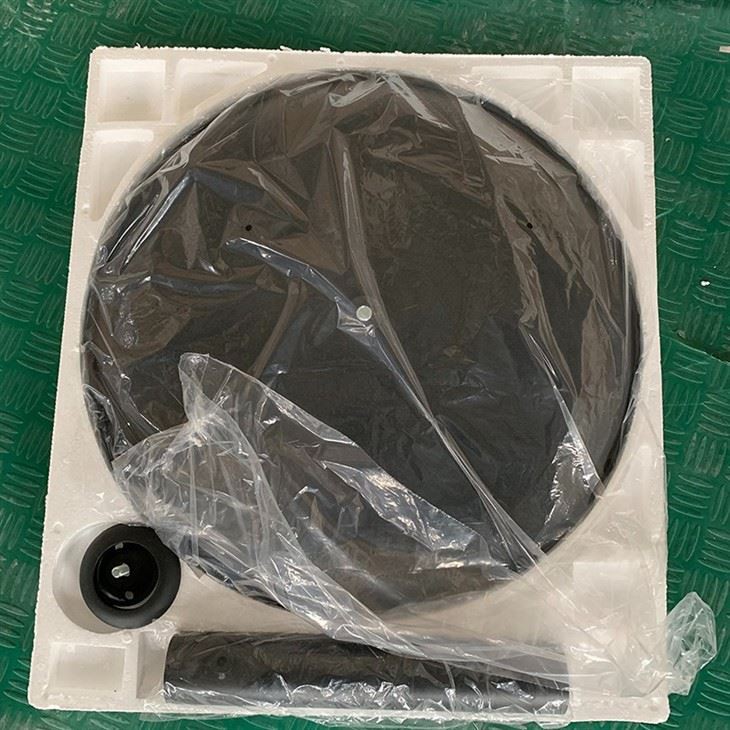
Concrete is a pretty tough material. It's made up of cement, aggregates (like sand and gravel), and water. The cement in concrete forms a hard matrix that holds everything together. This matrix gives concrete its strength and durability. But when it comes to chemicals, things can get a bit tricky.
Some chemicals are more aggressive than others. For example, strong acids can react with the calcium compounds in concrete. When an acid comes into contact with concrete, it can dissolve the calcium hydroxide, which is a by - product of the cement hydration process. This can lead to the weakening of the concrete structure, making it more porous and less resistant to further damage.
On the other hand, alkalis are generally less of a problem for concrete. In fact, concrete is naturally alkaline, so it can tolerate a certain level of alkaline substances without significant damage. However, extremely high - concentration alkalis can still have an impact on the long - term integrity of the concrete.
So, are round concrete umbrella bases resistant to chemicals? Well, it depends on a few factors.
The quality of the concrete used in the base is crucial. High - quality concrete with a proper mix design and good curing process is more likely to be resistant to chemical attack. At our company, we use a carefully formulated mix of cement, aggregates, and additives to ensure that our Round Concrete Umbrella Base has a high level of durability. We also follow strict curing procedures to allow the concrete to reach its full strength.
The thickness of the base also matters. A thicker base provides more material for the chemicals to penetrate through before they start to cause significant damage. Our round concrete umbrella bases are designed with an appropriate thickness to offer better protection against chemical exposure.
The type of environment where the umbrella base is placed is another important factor. If it's in a residential backyard where the exposure to chemicals is relatively low, such as occasional contact with mild cleaning agents, the base is likely to hold up well. However, if it's placed near a swimming pool where it's constantly exposed to chlorine and other pool chemicals, or in an industrial area where there are more aggressive chemical pollutants in the air and soil, the chemical resistance of the base will be put to a greater test.
To increase the chemical resistance of our round concrete umbrella bases, we sometimes apply a protective coating. This coating acts as a barrier between the concrete and the chemicals, preventing them from directly coming into contact with the concrete surface. There are different types of coatings available, such as epoxy coatings, acrylic coatings, and polyurethane coatings. Each has its own advantages and disadvantages in terms of durability, cost, and ease of application.
Now, let's talk about some common chemicals and how they might affect our round concrete umbrella bases.
Cleaning agents are something we use regularly to keep our outdoor furniture and equipment looking good. Most mild household cleaning agents, like dish soap or a diluted solution of vinegar and water, are not likely to cause any significant damage to the concrete base. However, harsh cleaners that contain strong acids or alkalis should be avoided. If you need to clean the base, it's best to use a gentle cleaner and a soft brush.
Fertilizers are often used in gardens. Some fertilizers contain nitrogen, phosphorus, and potassium, which are generally not harmful to concrete. However, fertilizers that are high in sulfuric acid or other strong acids can be a problem. If you're using fertilizers near your umbrella base, make sure to keep them away from direct contact with the base and rinse the area thoroughly if any fertilizer spills on the base.
Pool chemicals, as mentioned earlier, can be a challenge. Chlorine is a common chemical used in swimming pools, and it can react with the concrete over time. If your umbrella base is near a pool, it's a good idea to choose a base with a protective coating. Also, make sure to keep the base clean and dry to prevent the buildup of chemicals on the surface.
Rainwater can also have an impact on the concrete base. In some areas, rainwater can be acidic due to pollution. Acid rain can slowly erode the concrete surface. To protect against acid rain, the protective coating on the base can be very helpful.
In comparison, our Square Concrete Umbrella Base has similar chemical resistance characteristics. The shape doesn't really affect the chemical resistance, but the size and thickness might vary depending on the design, which can influence how well it withstands chemical exposure.
Overall, while round concrete umbrella bases can be resistant to chemicals to a certain extent, it's important to take proper care of them. By choosing a high - quality base, considering the environment, and using appropriate protective measures, you can ensure that your umbrella base lasts a long time.
If you're in the market for a round concrete umbrella base and want to learn more about its chemical resistance or other features, don't hesitate to reach out. We're here to answer all your questions and help you make the right choice for your needs. Whether you're setting up an umbrella in your backyard, a patio, or a commercial outdoor space, we've got the perfect base for you. Let's start a conversation about your requirements, and we can work together to find the best solution.
References
- Neville, A. M. (1995). Properties of Concrete. Pearson Education.
- Mehta, P. K., & Monteiro, P. J. M. (2013). Concrete: Microstructure, Properties, and Materials. McGraw - Hill Education.